An interesting workshop in April

hat workshopA Hat making Workshop

with

Pam de Groot

In the  Hat  workshop we will create a hat using the resist method.

This is the main method used to create pocket items such as bags, clothing and sculpture.

Participants will create their own template in the shape of their hat.  

Requirements

  • Byo Lunch, morning tea provided.
  • Hat block if you have one. Don’t worry if you don’t.
  • Medium piece of bubble wrap approx  700mmx1m.
  • Thin plastic 2x bubble size, old sheet (may get torn up)
  • 300g wool tops(sliver). Varying colours, have more of one colour, this will be your base. (This is more than you will need but it gives you choice.) I will have some you can purchase on the day if you like. You can email me for suppliers  as well.
  • Soap of choice, small ice cream container
  • Selection of fibres to add in. ie silk top, mohair, silk hankies, spun wool, silk fabric, muslin etc.

      I will have some fibres you can purchase on the day if you need.

  • Bring a couple of old towels
  • Paper and pencils, tape measure, permanent texta

When

Sunday April 7th 9.30am-5.00pm

Cost

  • $85 per day, per person plus any materials.(silk fabric and any extra fibres)

Where        

  • 7 Charles St Lawson
  • Ph 47591618  or 0410 094653 email   pamdegroot.fibre@gmail.com
How to make a hanging sleeve

Here are some very easy instructions for making a quilt hanging sleeve

This is the way all EPQ members will be required to make the hanging sleeve for any quilts entered in our 2013 Eastwood Patchwork Quilters Biennial Exhibition. There is also a You Tube video if you are like me and need to actually see how this is done. Thanks to Maureen for these great instructions.

  1. Cut or piece together fabric to make a strip 9″ tall and the same width as the quilt.
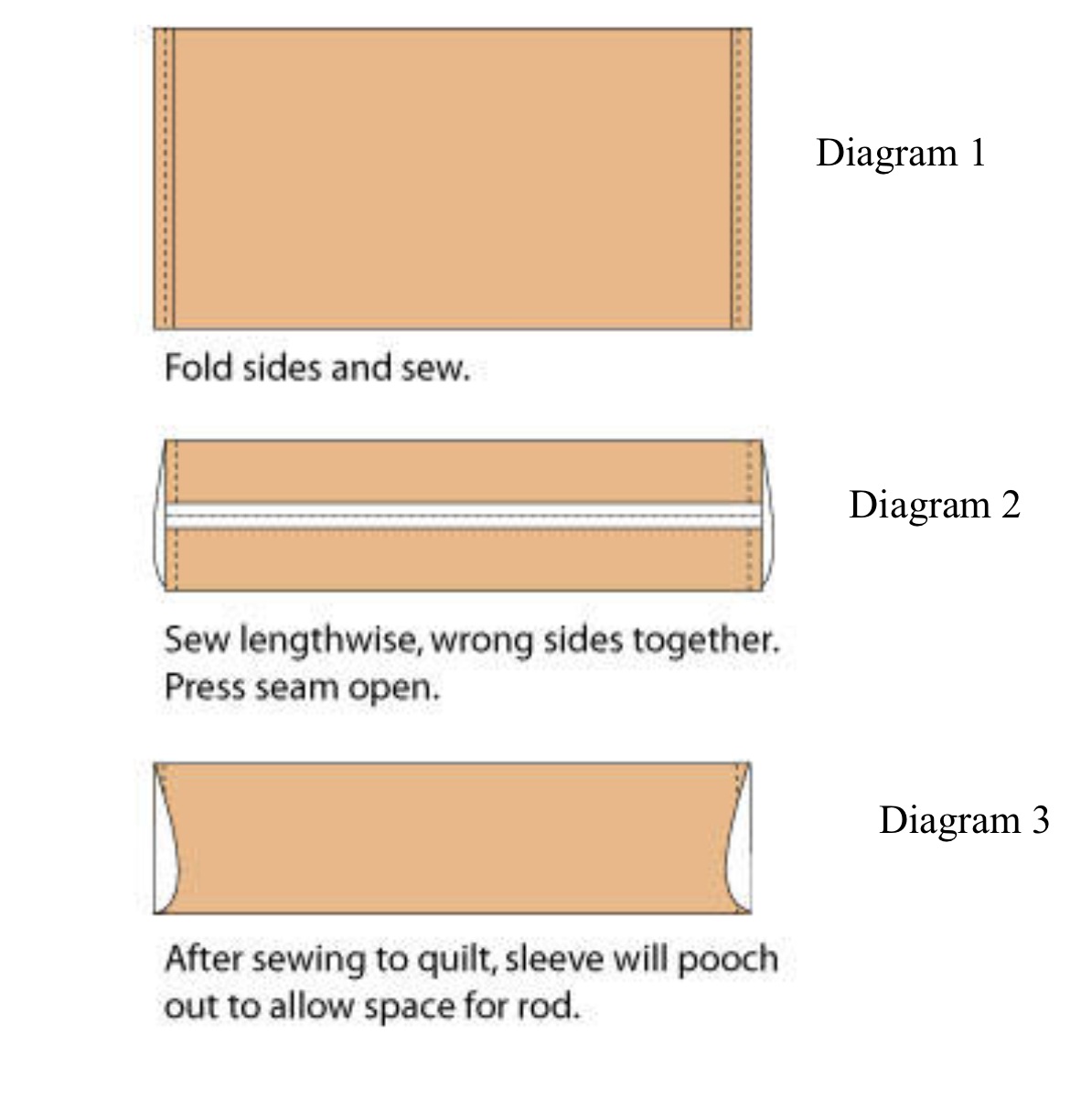
  2. Fold under short edges 1/4″, wrong sides together. Fold under again. Press. Sew a straight or zigzag seam to hem the folds.  (diagram 1)
  3. Now fold the strip lengthwise, wrong sides together, aligning its raw edges. Sew together with a 1/2″ seam allowance. Press the seam allowance open.  (Diagram 2)
  4. Place the open seam against the quilt’s back. Center and pin the top edge of the tube to the back of the quilt, about 1/2″ below the binding.
  5. Use a whipstitch to sew the top edge of the tube to the quilt backing. Stitch into the batting occasionally to help strengthen the seam.
  6. Smooth the sleeve downward along the quilt back, then make a 1/2″ fold along its length to create a pleat. Leaving the pleat intact, pin the sleeve bottom to the quilt.
  7. Whipstitch the lower edge of the sleeve to the quilt. Remove pins. The sleeve will pooch out a bit to allow space for a hanging rod. (Diagram 3)
  8. Whipstitch the back sides of the sleeve to the quilt. Leave the front sides unsewn to allow for rod insertion.
sleeve
 Here is a link to a great video by AQS Executive Show Director Bonnie Browning

https://www.youtube.com/watch?v=m_Vd82aSiAA&feature=player_embedded

The Quilt Study Group Meeting

Attention : Confirmation of Date
Please be advised that the next meeting for interested members of The Quilt Study Group will be held on  9 March 2013 

The Guest Speaker will be Lyn Dennis.

She will give an illustrated talk about her May 2012 United Kingdom  Quilt Research Trip.
Whilst there she was able to study some of the quilts in the collections of Norwich Guild Hall and (Lancashire) Gawthorpe Hall.
Lyn will share detailed information on approximately 10 – 12 quilts from each of these collections.

If you have any old English quilts or ‘heritage’ reproductions of such, to show, then please bring them along to share.

Venue : Powerhouse Museum
Date : 9 March 2013
Time : 2pm – 4.00pm
Entry : Meeting cover charge of $5.00 for members and $10 for non-members
Free Entry to Museum for all. 

Afternoon Tea will be provided.

Brush Farm House – Eastwood

Brush Farm c.1910

brush farm

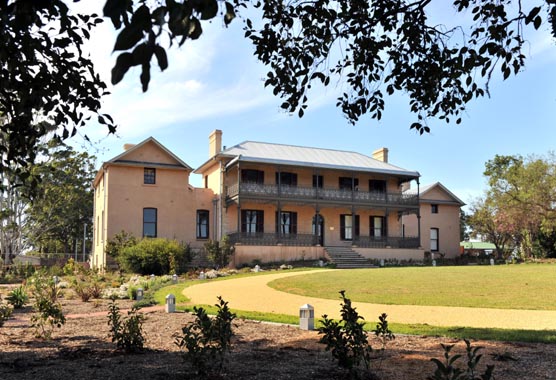
After restoration 2007

At EPQ we love Brush Farm House. It is a stunning venue in which to exhibit our quilts. The history of the house is interesting as a significant building in the suburb of Eastwood.

The Ryde City Council website tells of its early days . . .


Brush Farm House was built circa 1820 by Gregory Blaxland, following his purchase of the Brush Farm Estate in 1807. It is not only one of Australia’s oldest houses but also one of the most substantial houses surviving from the Macquarie period. Brush Farm House represents a nationally important site where some of the colony’s initial land grants were made. 

After that time it variously served as a grand residence for a state Premier and other notaries, a boy’s reformatory school and an administration centre before falling into disrepair.

In 2007, a multi-million dollar restoration was completed and the building re-opened as a community space. It was after that time when Eastwood Patchwork Quilters began a fruitful   relationship with our first exhibition there in 2009.

You can read more about the house at the Ryde City Council website

http://www.ryde.nsw.gov.au/About+Ryde/Historic+Ryde/Historic+Buildings/Brush+Farm+House